Porcelain veneers in Turkey: what you're actually being quoted for
Ask three Turkish clinics for a porcelain veneer quote and you may receive three different words for it — porcelain, laminate, e.max — plus a fourth option called “zirconium veneers” that is often something else entirely. The prices look comparable. The treatments may not be. This guide explains what porcelain veneers are, what each word on a Turkish quote should mean, what veneers cost in Turkey per tooth and as a full set, how long the trip takes, whether it’s safe, and how long the result lasts — written and medically reviewed by the clinical team at DentArma, a professor-led dental center in Antalya.
Porcelain veneers are thin ceramic shells bonded to the front surface of the teeth to change their shape, shade and alignment. Preparation typically removes about 0.3–0.7mm of enamel from the front only. “Laminate veneers” is the term many Turkish clinics use for the same treatment, and “e.max veneers” are porcelain veneers made from Ivoclar’s IPS e.max ceramic. At DentArma in Antalya they cost £170–£280 per veneer (≈ $230–$375 / €200–€325), so a ten-veneer upper smile is roughly £1,700–£2,800. Treatment takes one trip of about five to seven days, and well-made veneers commonly last 10–15 years or longer. The one thing to check before any of that: whether every unit on your quote is genuinely a veneer — because “zirconium veneers” in Turkish marketing are frequently full-coverage crowns.
Porcelain veneers in Turkey — the essentials
- Porcelain, laminate and e.max veneers describe the same treatment family: a thin ceramic shell on the front of the tooth. “Zirconium veneers” often do not.
- £170–£280 per veneer (≈ $230–$375 / €200–€325). Eight veneers ≈ £1,360–£2,240; twenty ≈ £3,400–£5,600.
- One trip of about 5–7 days, including a try-in where you approve the look before anything is bonded.
- Commonly 10–15 years or longer — decided far more by how the veneers were prepared and bonded than by the country they were made in.
- Irreversible. Enamel removed for a veneer doesn’t grow back, which is why the number of units and the amount of preparation matter more than the price per tooth.
- Documented at DentArma: Ivoclar IPS e.max, a Crown Certificate with LOT and REF numbers, a 5-year written warranty, and UK aftercare in Surrey, South Croydon and Glasgow.
What are porcelain veneers?
A porcelain veneer is a thin shell of dental ceramic, custom-made for one tooth and bonded permanently to its front surface. It changes what you see — colour, shape, length, small gaps, minor rotation — without covering the whole tooth. That’s the defining difference from a crown, which wraps the entire tooth and requires substantially more of it to be removed.
Most modern porcelain veneers are made from lithium disilicate glass-ceramic, of which Ivoclar’s IPS e.max is the best-known system. It’s chosen for front teeth because it is strong at thin sections — roughly 360–400 MPa flexural strength, several times that of traditional feldspathic porcelain — and because it transmits light much like natural enamel, so a veneered tooth doesn’t look flat or opaque next to its neighbours.
Preparation typically removes about 0.3–0.7mm of enamel from the front surface. Front-tooth enamel is usually around 1.0–1.5mm thick, so a conservative preparation keeps the bond on enamel — which matters, because veneers bond far more reliably to enamel than to the dentine beneath it.
Why "veneer" on a Turkish quote doesn't always mean a veneer
Here is the part most veneer pages leave out. None of the words used on a veneer quote is regulated. No authority checks that “porcelain veneer”, “laminate veneer” or “zirconium veneer” describes any particular material, thickness or amount of tooth preparation. Two clinics can use the same word for different treatments, and two different words for the same one.
That matters because the poor outcomes behind most “Turkey teeth” press coverage weren’t caused by porcelain veneers at all. They were caused by healthy teeth being prepared for full-coverage crowns while the work was described as veneers. The fix isn’t to avoid Turkey; it’s to know what each word on the quote should mean, and to get the answer in writing.
The quote decoder: six terms, what they should mean, and what to confirm
| Term on the quote | What it should mean | What to confirm in writing |
|---|---|---|
| Porcelain veneer | A thin ceramic shell bonded to the front surface; about 0.3–0.7mm of enamel removed from the front only. | "Front surface only" — and the ceramic and manufacturer named. |
| Laminate veneer | The same treatment. "Porcelain laminate veneer" is a standard clinical term that Turkish clinics often shorten to "laminate". | That it is not a different or cheaper product — and which ceramic it is made from. |
| E.max veneer | A porcelain veneer made from IPS e.max lithium disilicate, manufactured by Ivoclar. | The manufacturer by name — "e.max" is often used loosely for any lithium disilicate. |
| Zirconium veneer | Frequently a full-coverage zirconia crown. Thin zirconia veneers exist but are uncommon. | Does it cover the whole tooth? If yes, it is a crown — priced, prepared and planned as one. |
| Composite veneer | Tooth-coloured resin built up directly on the tooth, with little or no preparation; shorter-lived than porcelain. | A legitimate, more reversible option — but not a like-for-like price comparison with porcelain. |
| "Full set" / "Hollywood smile" | A number of units, not a treatment. Often 16–20 bright-white units across both arches. | How many units, which teeth, and whether each is a veneer or a crown — tooth by tooth. |
The terms are marketing language, not regulated categories. The written treatment plan is what defines the treatment.
Ask every clinic: “Will you send me a written plan stating, tooth by tooth, whether each unit is a veneer or a crown, how much enamel will be removed, and which ceramic and manufacturer you’ll use — before I book anything?” A clinic planning your treatment answers clearly. A clinic selling a package answers with a number of teeth and a price.
Laminate veneers in Turkey: are they the same as porcelain veneers?
Yes. Laminate veneers are porcelain veneers under another name. The full clinical term is “porcelain laminate veneer”; Turkish clinics commonly shorten it to “laminate veneer” in English (in Turkish, thin porcelain veneers are often called yaprak porselen — literally “leaf porcelain”). Some clinics use “laminate” specifically for thinner, minimal-preparation porcelain veneers, but the word alone doesn’t guarantee a thickness.
So the practical rule is simple: treat a laminate veneer quote exactly as you would a porcelain veneer quote. Same price range, same checks, same questions about the ceramic, the manufacturer and how much enamel will be removed. At DentArma, laminate and porcelain veneers are the same treatment at the same price.
How much do porcelain veneers cost in Turkey?
At DentArma in Antalya, a porcelain veneer costs £170–£280 per veneer, depending on the case. Laminate veneers and e.max veneers sit in the same range, because they are the same treatment. Patients travel from across Europe, North America and Australia, so here is the range in the currencies most often asked about:
| Currency | Price per porcelain veneer at DentArma |
|---|---|
| 🇬🇧 British Pounds (GBP) | £170 – £280 |
| 🇺🇸 US Dollars (USD) | ≈ $230 – $375 |
| 🇪🇺 Euros (EUR) | ≈ €200 – €325 |
| 🇨🇦 Canadian Dollars (CAD) | ≈ C$320 – C$530 |
| 🇦🇺 Australian Dollars (AUD) | ≈ A$325 – A$540 |
Approximate mid-market conversions at the time of writing. Your quote is fixed in writing, so exchange-rate movements don’t change your treatment cost after booking.
Turkish prices are lower than private prices in the UK, Western Europe, North America and Australia for structural reasons — clinic operating costs, laboratory fees, staff costs and rents — not because the ceramic is different. The same Ivoclar systems are used in private practice in all of those markets. For the full cost breakdown, including what changes the price, see how much veneers cost in Turkey.
How much is a full set of veneers in Turkey?
“Full veneers” or a “full set” isn’t a fixed treatment — it’s however many teeth show when you smile. Based on £170–£280 per veneer:
| Units | Typical use | GBP | USD (≈) | EUR (≈) |
|---|---|---|---|---|
| 6 veneers | Front teeth only, narrower smile line | £1,020 – £1,680 | $1,370 – $2,260 | €1,190 – €1,960 |
| 8 veneers | The common upper smile zone | £1,360 – £2,240 | $1,830 – $3,010 | €1,590 – €2,610 |
| 10 veneers | A wider upper smile — the most requested option | £1,700 – £2,800 | $2,290 – $3,770 | €1,980 – €3,270 |
| 16 veneers | Both arches, smile zone only | £2,720 – £4,480 | $3,660 – $6,030 | €3,170 – €5,230 |
| 20 veneers | Full upper and lower transformation | £3,400 – £5,600 | $4,570 – $7,530 | €3,970 – €6,540 |
Indicative totals from the per-veneer range. Your exact price is confirmed in a fixed written quote after a free consultation, itemised by unit, treatment type and material.
One honest observation about that table: the most expensive row is rarely the right one. Many patients who ask for twenty veneers have a smile line that shows eight or ten teeth, and sometimes whitening plus a few veneers achieves the result. At DentArma the smile line is assessed first, and the recommendation is the smallest number of units that gives an even, natural result. For package pricing and what’s included, see veneers package prices in Antalya.
Compare a quote you've already received
Rather than quote average prices for other countries — which vary enormously by city and clinic — this tool compares DentArma’s range with a quote you have actually been given.
How long does it take to get veneers in Turkey?
Porcelain veneer treatment is usually completed in a single trip of about five to seven days. Unlike implants, there’s no healing period and no second visit months later. A typical schedule at DentArma:
| Stage | What happens |
|---|---|
| Before you travel | Free remote assessment from photographs (and an X-ray if you have one); indicative plan and written quote |
| Day 1 | Examination and X-rays, smile line assessment, digital smile design; shade, shape and the final number of units agreed in writing |
| Day 2 | Minimal preparation of the front surface of each tooth, digital scan, temporary veneers fitted |
| Days 3–4 | Veneers produced; free days in Antalya |
| Day 5–6 | Try-in — you see and approve shape, length and shade before anything is permanently bonded |
| Final day | Final bonding, bite adjustment and polish; Crown Certificate and aftercare instructions issued |
Indicative schedule; exact sequencing depends on the number of units and your case.
When does veneer treatment need two trips?
When something needs treating before veneers can be placed. If gum disease, decay or a failing root-treated tooth needs attention first, or if crowding is better corrected with aligners before veneers, treatment can extend or need two trips. A clinic that tells you this before you book is doing its job.
Can veneers in Turkey be done in 3 days?
It can be done, but packages advertised in three days usually achieve it by removing the try-in — the appointment where you can still change shape, length and shade while change is easy. Ask any clinic whether a try-in is included, and how much time is allowed for it.
Is it safe to get veneers in Turkey? The 7 checks
Porcelain veneers in Turkey are safe when the treatment you receive is the one you agreed to, matched to the condition of your teeth, and documented. No official ranking of Turkish clinics exists, so the useful question isn’t “which country” but “which checks does this clinic pass”. Run these on any clinic on your shortlist — including DentArma.
| What to check | Possible risk if not checked | The DentArma answer |
|---|---|---|
| 1. Veneer or crown, tooth by tooth | Agreeing to veneers and receiving crowns means far more of each tooth is removed than you consented to — permanently. | ✓ Every unit itemised as a veneer or a crown in a fixed written quote before any preparation. |
| 2. How much enamel is removed | Over-preparation weakens the bond, raises the risk of sensitivity, and cannot be undone. | ✓ Conservative preparation — typically 0.3–0.7mm from the front surface only, with minimal-prep options discussed first. |
| 3. Where the unit count came from | A count chosen from a package tier, not your smile line, means healthy teeth treated unnecessarily. | ✓ Smile line assessed first; the recommendation is the fewest units that give an even, natural result. |
| 4. Material, named and documented | "Porcelain" alone tells you nothing; undocumented ceramic can't be matched or repaired by a dentist at home. | ✓ Ivoclar IPS e.max, recorded with manufacturer and LOT and REF numbers in a Crown Certificate you keep. |
| 5. Gums and bite assessed first | Veneers placed over gum disease, or on a grinder without protection, fail early at the margins or chip. | ✓ A professor of periodontology reviews gum health on every cosmetic case; night guards recommended where grinding is present. |
| 6. A try-in before bonding | Without one, you see your new smile only after it is permanently bonded. | ✓ A try-in appointment built into every schedule — you approve the look first. |
| 7. Who plans it, and what's guaranteed | A template smile designed by whoever is on shift; verbal warranties that can't be enforced. | ✓ Planned by two university professors; 5-year written warranty; authorised by the Turkish Ministry of Health. |
What are the risks of porcelain veneers?
The risks are the same everywhere in the world: temporary sensitivity after preparation, a veneer chipping or debonding, staining at a poorly fitted edge, and gum irritation where a margin is overhanging. Every one of them is reduced by the checks above. For the wider context on the nickname that dominates this subject, see our honest guide to Turkey teeth.
How long do Turkey veneers last?
Well-made porcelain veneers commonly last 10 to 15 years and often longer, and published clinical follow-up of lithium disilicate veneers reports high survival over periods well beyond ten years. Composite veneers usually need repair or replacement sooner.
What decides how long porcelain veneers last?
“Turkey veneers” don’t have a different lifespan from veneers made anywhere else. Five things decide it:
- Preparation that stays in enamel. The bond to enamel is the strongest; over-prepared teeth bond less reliably.
- Fit at the gum line. A precise margin keeps staining and decay out; a poor one is where most problems start.
- Gum health. Receding or inflamed gums expose edges and undermine the result.
- Bite and habits. Grinding, nail-biting and opening packets with your teeth shorten any veneer’s life. A night guard is cheap insurance.
- Maintenance. Daily cleaning and a yearly check-up.
What happens if a veneer chips or comes off?
It’s usually one unit, and it can usually be repaired or replaced individually. At DentArma, veneers carry a 5-year written warranty, and the Crown Certificate lets any dentist identify and match the exact ceramic years later.
Who should not get porcelain veneers?
Porcelain veneers are an excellent treatment for the right teeth — and the wrong first step for many people who ask for them. A good clinic will recommend fewer units, or none, when that serves you better.
- Active decay or gum disease — treat first; veneers placed over either fail early.
- Heavily filled or root-treated teeth — may need a crown rather than a veneer.
- Significant crowding — often better corrected with aligners, which may reduce or remove the need for veneers.
- Discolouration only — professional whitening may achieve the result without removing any enamel.
- Heavy grinding — not a bar, but it needs a night guard and sometimes a different material.
- Under 18 — veneers are generally not appropriate while teeth and gums are still developing.
E.max veneers in Turkey
E.max veneers are porcelain veneers made from IPS e.max lithium disilicate, manufactured by Ivoclar in Liechtenstein. It is the most widely used ceramic for front-teeth veneers because it is strong at thin sections and handles light like natural enamel. DentArma uses Ivoclar IPS e.max for porcelain veneers and records the manufacturer and batch numbers in your Crown Certificate. The term is often used loosely across the market, so ask any clinic quoting “e.max” to name Ivoclar in writing. For the material in depth — Press versus CAD, and how it compares with zirconia — see e.max veneers in Turkey.
Porcelain veneers in Antalya, Turkey
Antalya is one of Turkey’s two main dental destinations, and it suits a short cosmetic trip well. It’s compact, so airport-to-hotel and hotel-to-clinic transfers take minutes rather than the hour-plus common across Istanbul — useful when you’re travelling to the clinic several times in a week. It has direct flights of around four hours from most UK and European airports, with connections from North America and Australia via Istanbul. And the days between preparation and try-in are spent by the Mediterranean rather than in a city hotel room.
DentArma is in the Lara district of Antalya, a short transfer from Antalya Airport, with hotel accommodation and VIP transfers included in the package. For package detail, see veneers package prices in Antalya.
What aftercare do porcelain veneers need?
Veneers need the same care as natural teeth: daily cleaning, a yearly check-up, and a night guard if you grind. UK patients are supported by three independent, GDC-registered partner practices in Surrey, South Croydon and Glasgow for yearly check-ups, minor aftercare and consultations, booked through DentArma so your records arrive before you do — see UK aftercare clinics. Patients everywhere have direct WhatsApp access to the clinic, and because the ceramic is documented, any dentist worldwide can identify and service your veneers.
Why choose DentArma for porcelain veneers?
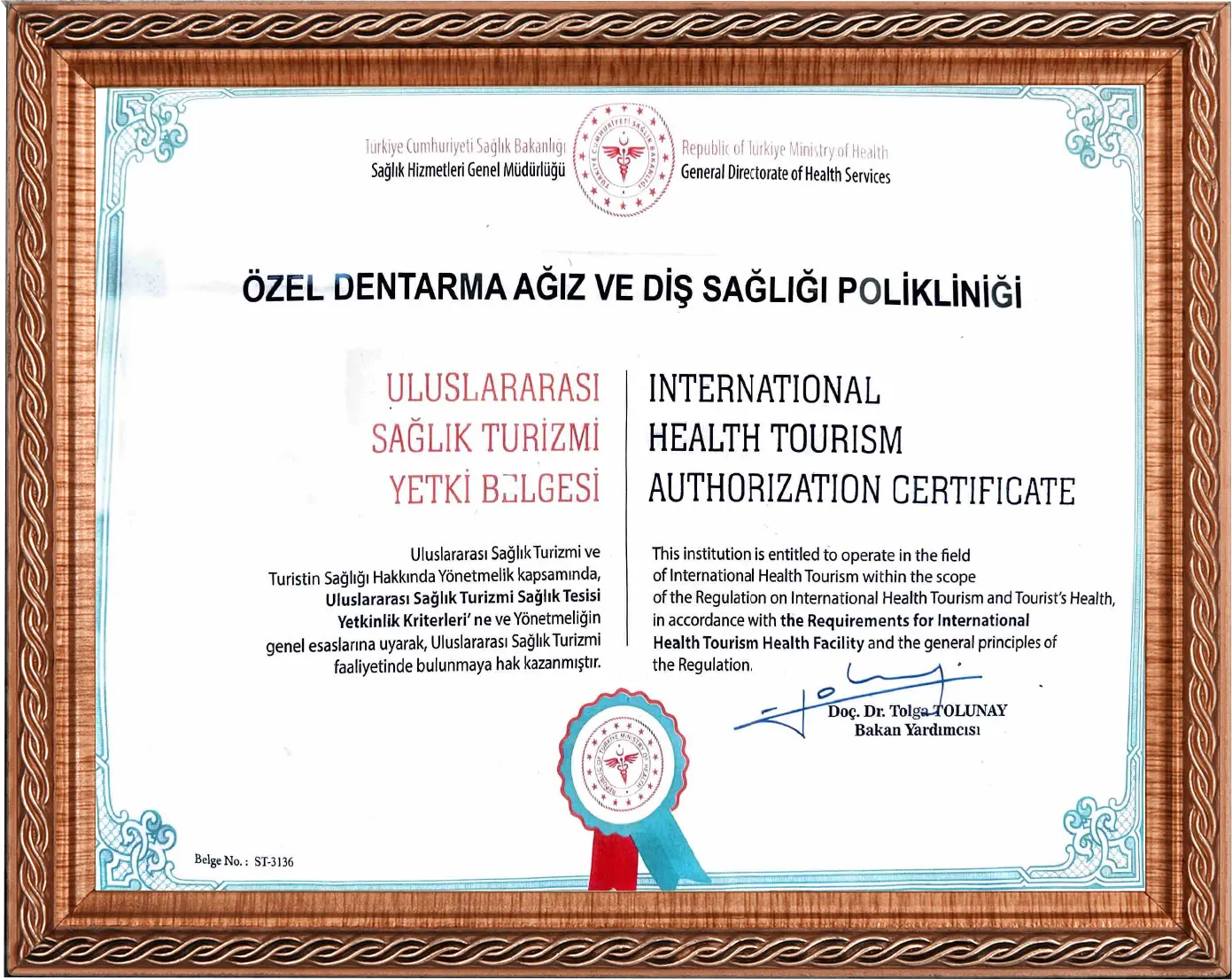
If the outcome of a veneer case is decided by the unit count, the preparation and the material, then who makes those decisions is the whole question. DentArma is a professor-led dental center in the Lara district of Antalya, founded and led by Prof. Dr. Emre Şeker and Prof. Dr. Başak Şeker. Cosmetic cases are planned at professor level rather than delegated to whichever clinician is on shift. The clinic has treated more than 7,000 international patients over 20+ years, is supported by a 27-person clinical and patient-care team, holds 4.9 / 5 across 700+ verified online reviews, and is authorised by the Turkish Ministry of Health to care for and treat international patients.
The clinic is an award-winning dental center — recognised in 2026 [REPLACE: exact award name & awarding body]. UK patients can meet the team in person at a UK Meeting Day — an information and introduction event — before making any decision.



Prof. Dr. Emre Şeker
A published, peer-reviewed academic with 40+ publications and founding professor at DentArma. Prosthodontics is the discipline that governs veneers, crowns and smile design — including whether a tooth needs a veneer or a crown, and how many units a smile needs — and he personally leads and reviews cosmetic cases for international patients.
Prof. Dr. Başak Şeker
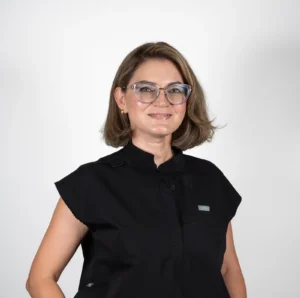
Founding professor at DentArma and a professor of periodontology, overseeing the gum health and gum-line detail that decide whether veneers look natural where they meet the gum — and how long they last.
Frequently asked questions about porcelain veneers in Turkey
How much do veneers cost in Turkey?
At DentArma in Antalya, a porcelain veneer costs £170–£280 (≈ $230–$375 / €200–€325), depending on the case. The full package, including hotel and VIP transfers, is confirmed in a fixed written quote after a free consultation. Price per tooth is a weak comparison on its own — the number of units, and whether each is a veneer or a crown, matter far more.
How much are full veneers in Turkey?
“Full veneers” usually means a full set — a number of units, not a fixed treatment. At £170–£280 per veneer: eight veneers ≈ £1,360–£2,240, ten ≈ £1,700–£2,800, sixteen ≈ £2,720–£4,480 and twenty ≈ £3,400–£5,600. Many patients need fewer units than a full set — the right number comes from how many teeth show when you smile.
How much are laminate veneers in Turkey?
Laminate veneers are porcelain veneers under another name, so they are priced the same: £170–£280 per veneer at DentArma (≈ $230–$375 / €200–€325). “Laminate” is not a cheaper or different product. Ask any clinic quoting laminate veneers to name the ceramic and manufacturer in writing.
Are laminate veneers the same as porcelain veneers?
Yes. “Porcelain laminate veneer” is a standard clinical term that Turkish clinics commonly shorten to “laminate veneer”. Both describe a thin ceramic shell bonded to the front of a tooth. The word alone doesn’t tell you the material or thickness, so confirm both in your written plan.
How many days do I need in Turkey for veneers?
Usually a single trip of about five to seven days: examination and smile design, preparation with temporaries, production, a try-in, then final bonding. Cases needing gum treatment, root canal treatment or alignment first can take longer or need two trips. Schedules shorter than five days usually remove the try-in — the step that protects the result.
Is it safe to get veneers in Turkey?
Yes — when the treatment you receive is the one you agreed to and matches the condition of your teeth. The poor outcomes behind most press coverage involve healthy teeth prepared for crowns while the work was described as veneers. Require a written, tooth-by-tooth plan stating veneer or crown, enamel removed, material, who plans the case, and what the warranty covers. DentArma is authorised by the Turkish Ministry of Health and every case is planned by two university professors.
How long do porcelain veneers last?
Well-made porcelain veneers commonly last 10–15 years and often longer. Where they were made matters far less than how: preparation that keeps the bond on enamel, a precise fit at the gum line, healthy gums, and a night guard for grinders. Composite veneers usually need repair or replacement sooner. At DentArma, veneers carry a 5-year written warranty.
Are zirconium veneers the same as porcelain veneers?
Often not. In Turkish dental marketing, “zirconium veneers” frequently describes full-coverage zirconia crowns, which remove far more tooth structure than a porcelain veneer. Thin zirconia veneers exist but are uncommon. Ask whether the restoration covers only the front surface or the whole tooth — if the whole tooth, it’s a crown.
Are e.max veneers porcelain veneers?
Yes. E.max veneers are porcelain veneers made from IPS e.max lithium disilicate, manufactured by Ivoclar — the most widely used ceramic for front-teeth veneers. DentArma uses Ivoclar IPS e.max and records the manufacturer and batch numbers in a Crown Certificate.
Can I get porcelain veneers in Antalya?
Yes. DentArma is a professor-led dental center in the Lara district of Antalya, a short transfer from Antalya Airport, with direct flights of around four hours from most UK and European airports and connections from North America and Australia via Istanbul. Hotel and VIP transfers are included.
Am I a good candidate for porcelain veneers?
You may be if your teeth and gums are healthy and you want to change shape, shade, small gaps or minor alignment. Active decay or gum disease should be treated first. Heavily filled or root-treated teeth may need crowns instead. Significant crowding is often better addressed with aligners, and discolouration alone may respond to whitening. Heavy grinders need a night guard. A good clinic will recommend fewer units, or no veneers at all, when that serves you better.
How do I get an exact price for porcelain veneers?
Send clear photographs of your smile — and a panoramic X-ray if you have one — for a free, no-obligation assessment. You receive a fixed written quote stating, tooth by tooth, whether each unit is a veneer or a crown, the material used, and what the package includes.
Get a quote that says what it means.
Send photos of your smile for a free, no-obligation plan — stating tooth by tooth whether each unit is a veneer or a crown, how much enamel is removed, the ceramic used, and exactly what it costs.