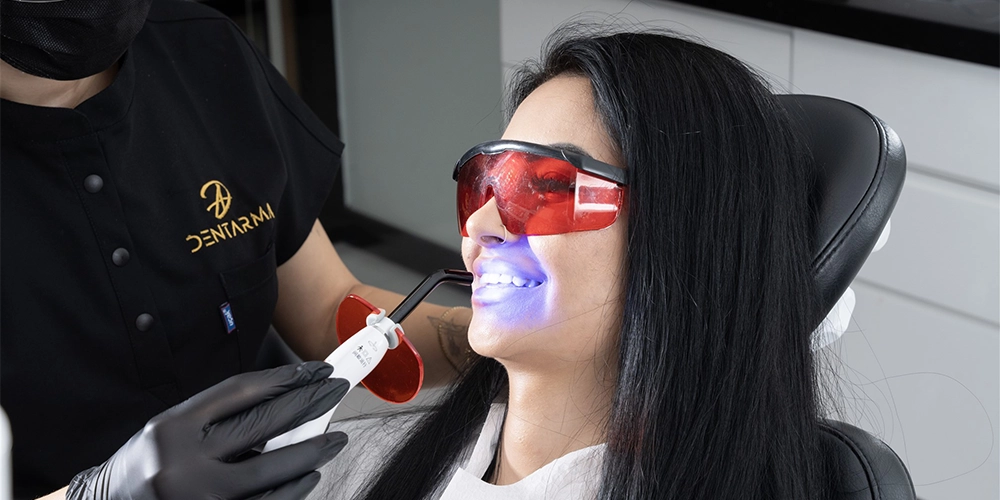

It is the question every UK patient asks before booking a flight — and it is the right question to ask. Dental tourism in Turkey has grown enormously over the past decade, and with it, both the quality of care available and the number of clinics competing for international patients.
The honest answer is: yes, dental tourism in Turkey is safe — but with an important condition. Safety depends almost entirely on which clinic you choose and how thoroughly you research it before committing. Choose well and you will return home with outstanding results at a fraction of the UK price. Choose poorly and you may find yourself paying for corrective work on both sides of the trip.
This guide gives you the complete picture: the real standards that reputable Turkish clinics operate to, the warning signs that separate trustworthy providers from risky ones, and the specific questions to ask before you book anything.
How many UK patients travel to Turkey for dental treatment?
Turkey has become one of the most popular destinations for dental tourism in the world. Estimates suggest that over 300,000 UK nationals travel to Turkey each year for dental procedures — a number that has grown steadily as awareness of the price gap has spread and as the quality of Turkish dental clinics has continued to improve.
The vast majority of these patients return home satisfied, with completed treatment and money left over compared to what the same procedure would have cost in the UK. Complications and poor outcomes do occur, but they are overwhelmingly concentrated in clinics that were chosen without proper research — typically on the basis of price alone.
Key point: The question is not whether Turkey is a safe destination for dental treatment. It is whether the specific clinic you are considering meets the standards you should expect. This guide helps you make that assessment.
What standards do reputable Turkish dental clinics operate to?
Turkey has a well-established regulatory framework for dental clinics treating international patients. Understanding what this looks like in practice — rather than in theory — helps you evaluate any clinic you are considering.
1. International Health Tourism Authorisation Certificate
Turkey’s Ministry of Health issues a specific certification to clinics that are authorised to treat international patients. This is not a voluntary accreditation badge — it is a formal regulatory requirement. To hold this certificate, a clinic must demonstrate compliance with defined standards covering clinical facilities, sterilisation protocols, emergency preparedness, staffing qualifications and patient documentation.
Any clinic that markets itself to UK patients should hold this certificate and should be able to show it to you on request. If a clinic cannot or will not produce it, that is a clear warning sign.
2. Qualified specialist clinicians
In Turkey as in the UK, dentistry has specialist disciplines. Implant surgery, prosthodontics, orthodontics and periodontics all require specific postgraduate training beyond a general dentistry degree. At a reputable clinic, implant procedures are performed by a prosthodontist or oral surgeon — not a general dentist who has attended a weekend implant course.
You have every right to ask about the qualifications of the clinician who will perform your treatment. Their name, title and credentials should be findable independently — on the clinic’s website, on academic databases or on the relevant Turkish professional registration bodies.
3. Premium implant brands with serial number documentation
The implant fixture — the titanium screw that integrates with your jawbone — is the most critical component of any implant treatment. Premium brands such as Nobel Biocare, Straumann and Osstem have decades of clinical research behind them, established manufacturing standards and global aftercare networks. Their implants come with unique serial numbers that can be verified.
A reputable clinic will tell you upfront exactly which brand they use, and will provide you with written documentation of the fixture serial number after placement. This documentation matters for your UK dentist, your dental records, and any future work you may need years down the line.
4. Modern facilities and sterilisation standards
Clinical hygiene standards in reputable Turkish dental clinics are comparable to those in the UK. Look for clinics that use Class B autoclaves for sterilisation, maintain a clean and organised clinical environment, and use single-use disposables where appropriate. A clinic that is proud of its facilities will typically show them in photos or videos on their website, and will allow you to see the clinical area on arrival.
5. Transparent, detailed treatment planning
Before any work begins, a reputable clinic will conduct a thorough assessment — including X-rays or a 3D CBCT scan where appropriate — and will provide a written treatment plan that outlines every procedure, the materials to be used, the timeline and the total cost. Nothing should be left vague. If a clinic quotes you a price without reviewing any diagnostic imaging, treat that quote with caution.
What to look for — the green flags of a trustworthy clinic
| ✓ | Holds the International Health Tourism Authorisation Certificate Issued by Turkey’s Ministry of Health. Ask for it by name and request to see a copy. |
| ✓ | Names the implant brand upfront Nobel Biocare, Straumann and Osstem are the most widely recognised premium brands. The brand should be stated clearly in your quote, not mentioned only when you ask. |
| ✓ | The treating clinician is a named specialist Not just “our experienced team” — a specific prosthodontist or oral surgeon whose credentials you can look up independently. |
| ✓ | Substantial volume of verified reviews Look for 100+ reviews across Trustpilot and Google, with detailed accounts from UK patients describing the full treatment journey — not just short star ratings. |
| ✓ | A dedicated patient coordinator A single point of contact who communicates with you in English before, during and after your visit. This person should be reachable and responsive. |
| ✓ | Written treatment plan and written guarantee Every procedure, material, cost and timeline confirmed in writing. The guarantee should also be in writing — verbal assurances are not enough. |
| ✓ | Full English-language documentation X-rays, treatment records, implant serial numbers and aftercare instructions all provided in English so your UK dentist can continue your care seamlessly. |
| ✓ | Airport transfers and accommodation guidance A clinic that has systems in place to help international patients with logistics is one that has been doing this long enough to understand what patients need. |
Warning signs — the red flags to walk away from
| ✗ | No mention of the implant brand — or a brand you cannot find information on Some clinics use unbranded or low-cost implant fixtures without disclosing this. If the brand is not named clearly, ask directly. Evasiveness on this point is a serious concern. |
| ✗ | Prices that seem dramatically lower than other reputable clinics There is a genuine price advantage to treating in Turkey, but that advantage has limits. If a quote is significantly below the market rate for reputable Turkish clinics, it is worth asking what corners are being cut. |
| ✗ | No verifiable specialist qualifications for the treating clinician If the clinic’s website lists no named clinicians, or lists only general dentists for specialist procedures, proceed with caution. |
| ✗ | Very few reviews, or reviews that seem generic and undetailed A clinic with fewer than 50 reviews, or reviews that do not describe the actual treatment experience, does not have a sufficient track record to assess. |
| ✗ | Pressure to pay a large deposit or commit quickly Reputable clinics do not use high-pressure sales tactics. A free consultation and a detailed quote should come with no obligation to proceed. |
| ✗ | No written guarantee or vague verbal promises only Any guarantee worth having is one that is written down, specifies what it covers and has a clear process for claiming it. |
What about aftercare when I am back in the UK?
This is one of the most common concerns UK patients raise — and a legitimate one. The good news is that with proper documentation, your UK dentist can manage your aftercare without difficulty.
A reputable Turkish dental clinic will provide you with a complete treatment record in English, including the brand and serial number of any implant placed, the materials used in any crown or veneer work, X-rays taken before and after treatment, and written aftercare instructions. This is everything your UK dentist needs.
Most implant complications, if they occur at all, are manageable by any competent dentist or oral surgeon once they know what implant system is in place. The serial number documentation makes this straightforward.
At DentArma: We provide all patients with a full English-language treatment pack on departure. Our team also remains available via WhatsApp for remote aftercare support after you return home. In the rare event that a complication requires in-person attention, we arrange a priority return appointment at no additional surgical cost.
Will my UK dentist support me if I have had treatment abroad?
UK dentists are generally willing to provide routine aftercare and emergency treatment for patients who have had dental work abroad, provided they have adequate documentation of what was done. Some NHS dentists may decline to perform certain follow-up procedures on work done privately abroad, but most private UK dentists will assess and treat complications without issue.
The key is documentation. A clinic that provides thorough English-language records — including implant brand, fixture dimensions and serial numbers — makes life significantly easier for any UK dentist who subsequently treats you.
Common questions from UK patients
Is Turkey regulated for dental treatment?
Yes. Turkey has a well-established regulatory framework for dental clinics, overseen by the Ministry of Health. Clinics treating international patients must hold an International Health Tourism Authorisation Certificate. Turkish dentists are trained to European standards and must be registered with the Turkish Dental Association.
What happens if something goes wrong?
If a complication arises after treatment at a reputable clinic, the clinic should be your first point of contact — most issues can be assessed remotely via photos and X-rays, and resolved on a follow-up visit. Your UK dentist can also manage most complications once they have your treatment documentation. The most important thing is to choose a clinic that communicates openly and has a clear process for handling aftercare.
Is the quality of materials the same as in the UK?
At clinics that use premium implant brands — Nobel Biocare, Straumann, Osstem — yes, the materials are identical to those used in the UK. These brands are sourced globally at consistent specifications. The difference in price reflects the lower cost of labour and overheads in Turkey, not any difference in material quality.
Do I need travel insurance for dental tourism?
Standard travel insurance policies generally do not cover elective dental treatment abroad or complications arising from it. It is worth seeking a specialist medical travel insurance policy that covers dental procedures if you want financial protection for your trip. Some clinics also offer their own guarantee schemes — ask about this before you book.
How do I know if a clinic’s reviews are genuine?
Look for reviews on independent platforms — Trustpilot and Google Reviews are the most reliable because they require verified accounts. Be wary of reviews that appear only on the clinic’s own website, or that read as generic five-star endorsements without describing the actual treatment. Detailed reviews that mention specific staff names, treatment types and the length of the stay are the most credible.
Why UK patients choose DentArma
DentArma was established with a clear focus on international patients — particularly those travelling from the UK. Everything about how we work reflects that:
- We hold the International Health Tourism Authorisation Certificate from Turkey’s Ministry of Health
- Our implantology is led by Prof. Dr. Emre Seker, a full Professor of Prosthodontics with over 20 years of specialist experience
- We use Nobel Biocare and Straumann implant systems exclusively — never unbranded or low-cost fixtures
- Every patient receives a named UK-facing coordinator who is available from first enquiry through to aftercare
- All treatment documentation is provided in English, including implant serial numbers
- We have hundreds of verified reviews on Trustpilot and Google from UK patients
- We arrange airport transfers, can assist with hotel recommendations, and are available via WhatsApp throughout your visit and after you return home
From a recent UK patient: I researched dental clinics for 14 months before choosing DentArma. The level of communication and the amount of detail supplied was very reassuring. I have no hesitation in recommending this company. — Jack T., Trustpilot
You might also find these useful
- Dental Implants in Turkey vs the UK: Cost, Safety & What to Know in 2026 — dentarma.com/blog/dental-implants-turkey-vs-uk/
- How to Plan Your Dental Trip to Antalya — dentarma.com/blog/patient-journey/
- Meet the DentArma Team — dentarma.com/our-team/
- All Treatments at DentArma — dentarma.com/treatments/
Ready to take the first step?
Send us a photo or X-ray via WhatsApp and receive a free, personalised treatment plan within 24 hours. No pressure, no obligation.