Zirconium crowns in Turkey: cost, packages and how to choose properly
Zirconium crowns are the most widely fitted restoration in Turkish dental tourism — and the most frequently misunderstood. Patients are quoted “20 zirconium crowns” as a package before anyone has established whether they need twenty crowns, whether zirconia is the right material for each tooth, or whether some of those teeth would be better served by something far less invasive. This guide explains what zirconium crowns are, how they compare with e.max and porcelain, what they cost in Turkey, what belongs in a package, how long they last, and the six checks for choosing a clinic — written and medically reviewed by the clinical team at DentArma, a professor-led dental center in Antalya. For our own crown treatment details, see zirconium crowns at DentArma.
- THE DIRECT ANSWER
- Zirconium crowns (also called zirconia crowns) are full-coverage restorations milled from zirconium dioxide a metal-free ceramic with a flexural strength of roughly 900–1200 MPa, several times stronger than lithium disilicate. They cover the entire tooth and are used where a tooth is damaged, heavily filled, root-treated or badly worn. Across Turkish clinics they typically cost £140–£250 per crown (≈ $190–$340 / €165–€290), against roughly £500–£800 in the UK and $800–$1,500 in the USA a saving of around 65–75%. Treatment is usually completed in one trip of about five to seven days. The critical question is not the price per unit but whether a crown is the right treatment for each individual tooth.
Zirconium crowns in Turkey the essentials
- Strongest mainstream crown material: zirconia's ~900–1200 MPa flexural strength makes it the first choice for molars, bridges and patients who grind their teeth.
- Cost across Turkish clinics: £140–£250 per crown (≈ $190–$340 USD / €165–€290 EUR), roughly 65–75% below UK and US private prices.
- Monolithic vs layered matters. Monolithic is milled from one block and won't chip at a junction; layered adds a porcelain surface for translucency but introduces a potential chip point.
- Zirconia isn't always the right answer. E.max often looks better on front teeth, and a healthy tooth needing only cosmetic change may suit a veneer instead which removes far less tooth structure.
- Lifespan: commonly 10–15 years, frequently longer with good hygiene, check-ups and a night guard if you grind. No crown is permanent.
- Documented at DentArma: Dental Direkt zirconia, a Crown Certificate recording material and LOT and REF numbers, and a 5-year clinic warranty.
What are zirconium crowns?
A zirconium crown more precisely a zirconia crown is a cap that covers the entire visible portion of a tooth, milled by CAD/CAM from a block of zirconium dioxide. The material is a ceramic, not a metal, despite the name: there is no dark metal substructure and no grey line at the gum, which is what distinguishes it from older porcelain-fused-to-metal crowns.
What makes zirconia distinctive is strength. Its flexural strength of roughly 900–1200 MPa is several times that of lithium disilicate ceramics, which sit around 360–400 MPa. In practice this means zirconia handles the heavy loads of the back of the mouth bite forces on molars are several times higher than on front teeth and tolerates grinding far better than most alternatives. It is also biocompatible, with no metal content to trigger sensitivity in patients who react to metal alloys.
Zirconium crowns are appropriate where a tooth needs full coverage: teeth that are heavily filled, structurally damaged, root-treated, badly worn, or acting as bridge abutments. They are also used to restore implants. What they are not is a cosmetic default for healthy teeth a point we return to below, because it is where most patients get poor advice.
Monolithic vs layered zirconia: which should you ask for?
This distinction rarely appears in package advertising, but it changes both the appearance and the durability of your result.
Monolithic zirconia is milled from a single solid block, with the shade built into the material and refined by staining and glazing. Because there is no separate porcelain layer, there is no junction where chipping can begin making it the most fracture-resistant option available. It is the usual recommendation for molars, for bridges, and for anyone with a heavy bite or a grinding habit.
Layered zirconia uses a strong zirconia core with a translucent porcelain layer fired over the top. The layering allows a more lifelike play of light, which can look better on visible front teeth but the interface between core and porcelain is a potential chipping point under load.
Modern high-translucency monolithic zirconia has narrowed the aesthetic gap considerably, and many clinicians now use it even in the smile zone. The right choice depends on which tooth, how hard you bite, and how much translucency the neighbouring teeth show. At DentArma the recommendation is made per tooth by the founding professors, not applied uniformly across a package.
Zirconium crowns vs e.max and porcelain: which is better?
Neither material is universally better they answer different problems, and a well-planned mouth often uses both. Here is the honest comparison:
| Zirconia | IPS e.max (lithium disilicate) | Porcelain-fused-to-metal | |
|---|---|---|---|
| Flexural strength | ≈ 900–1200 MPa | ≈ 360–400 MPa | Strong core, but porcelain layer can chip |
| Appearance | Excellent; high-translucency grades close the gap on front teeth | Best light transmission — closest to natural enamel | Can show a dark line at the gum over time |
| Best suited to | Molars, bridges, heavy bites, grinding, implant crowns | Front teeth and cosmetic cases where translucency matters | Largely superseded by metal-free ceramics |
| Metal content | Нет | Нет | Metal substructure |
| Typical Turkey price | £140 – £250 | Comparable to slightly higher | Generally the lowest-cost option |
Material properties are widely published industry figures and vary by system and processing. Prices are typical ranges observed across Turkish clinics, not quotes.
The practical rule most prosthodontists follow: strength where you chew, translucency where you smile. Zirconia for molars and anything load-bearing; e.max where a front tooth needs to disappear against its neighbours. If you grind heavily, zirconia may be recommended even for front teeth. DentArma works with Dental Direkt zirconia (Germany) and Ivoclar IPS e.max (Liechtenstein), so the choice is made clinically rather than by what the clinic happens to stock.
When a zirconium crown is not the right answer
Here is the part most crown pages leave out. A crown covers the whole tooth, which means substantially more tooth structure has to be removed than for a veneer and enamel does not grow back. That trade-off is entirely justified when a tooth is damaged, heavily filled or root-treated. It is much harder to justify on a healthy tooth that simply needs a cosmetic change.
| Zirconium crown | Veneer | |
|---|---|---|
| Coverage | The entire tooth, all around | Только передняя поверхность |
| Tooth structure removed | Substantially more, from every surface | Typically 0.3–0.7mm of enamel from the front |
| Right for | Damaged, heavily filled, root-treated, badly worn teeth; bridges; implants | Cosmetic change on healthy teeth — shape, shade, small gaps |
- THE QUESTION WORTH ASKING
- If you are quoted a fixed number of crowns before anyone has examined each tooth, ask: "Which of these teeth actually need full coverage, and which could be treated with a veneer or left alone?" A clinic planning treatment will answer tooth by tooth. Many well-designed smiles combine crowns where teeth are compromised with veneers where they are healthy and that mixed plan is almost always the more conservative one.
Циркониевые коронки Turkey cost
Across Turkish clinics, zirconium crowns typically range from £140 to £250 per crown in 2026, depending on the clinic, the zirconia brand and whether the crown is monolithic or layered. Because patients travel from across Europe, North America and Australia, here is that range in the currencies most often asked about:
| Currency | Typical price per zirconium crown in Turkey |
|---|---|
| 🇬🇧 British Pounds (GBP) | £140 – £250 |
| 🇺🇸 US Dollars (USD) | ≈ $190 – $340 |
| 🇪🇺 Euros (EUR) | ≈ €165 – €290 |
| 🇨🇦 Canadian Dollars (CAD) | ≈ C$265 – C$470 |
| 🇦🇺 Australian Dollars (AUD) | ≈ A$270 – A$480 |
Ranges observed across Turkish clinics in 2026, shown as market context rather than as a quote.
Zirconium crowns Turkey price for a full set
Full-set cases are usually quoted as packages rather than per unit. A “full set” commonly means 16, 20 or 24 crowns depending on how wide your smile is and how many teeth need functional coverage:
| Number of crowns | Typical use | Indicative range (GBP) |
|---|---|---|
| 8 crowns | Upper smile zone only | £1,120 – £2,000 |
| 16 crowns | Both arches, smile zone | £2,240 – £4,000 |
| 20 crowns | The most commonly quoted full set | £2,800 – £5,000 |
| 24 crowns | Wide smile, full functional coverage | £3,360 – £6,000 |
Indicative totals based on the market range above. Package pricing often improves the per-unit rate at volume.
For comparison, a single zirconia crown commonly costs £500–£800 privately in the UK, $800–$1,500 in the USA, and broadly similar figures in Canada and Australia — so a twenty-unit case that runs into five figures at home can be a fraction of that in Turkey. The gap is structural: lower clinic operating costs, laboratory fees and rents, plus the exchange rate. It does not come from cheaper zirconia, provided the brand is named and documented.
What's in a zirconium crowns Turkey package?
Worth stating plainly: “all-inclusive” is not a regulated term in dental tourism. Two packages at the same headline price can contain materially different treatment, so compare inclusion lists rather than numbers. A genuine zirconium crowns package should cover:
- Consultation, examination and panoramic X-ray
- Digital smile design and shade selection
- Tooth preparation and digital scanning
- Temporary crowns while the permanent units are milled
- Your zirconium crowns, with the brand named in writing
- Try-in, bite adjustment and final cementation
- Hotel accommodation for your stay
- VIP трансферы из аэропорта, отеля и клиники
- Medications and at least one aftercare check
Flights are normally the only major cost on top. Ask specifically about exclusions root canal treatment, core build-ups and gum treatment are the three most commonly needed extras, and a clinic that flags them honestly before you travel is one worth trusting. Treatment is usually completed in a single trip of about five to seven days; implants are different and need two visits three to four months apart.
How long do zirconium crowns last?
Zirconium crowns commonly last 10 to 15 years, and frequently longer with good care. Zirconia’s resistance to chipping and fracture is the main reason it often outlasts layered ceramics in load-bearing positions. But no crown is permanent, and honesty matters here more than optimism: lifespan depends far more on how the crown was made and fitted than on the material alone.
- Four factors decide it:
- Preparation quality. Conservative, even preparation leaves strong tooth structure to support the crown.
- Margin fit. Where the crown meets the tooth at the gum line, a precise margin keeps bacteria out. A poor margin invites decay underneath — often undetected until advanced.
- Gum health. Crowns sit against the gum, and untreated gum disease undermines even perfectly made restorations.
- Your habits. Daily cleaning, regular check-ups and a night guard if you grind make a measurable difference.
One honest limitation worth knowing: zirconia is harder than natural enamel, so a poorly adjusted zirconia crown can wear the opposing tooth over time. This is managed by careful bite adjustment and polishing at fitting — another reason the final appointment matters as much as the milling. At DentArma, crowns and bridges carry a 5-year clinic warranty, and every patient receives a Crown Certificate recording the material, manufacturer and LOT and REF numbers.
Best dental clinics in Turkey for zirconium crowns: the 6 checks
No official ranking of Turkish clinics exists, and most “top 10” lists are paid placements. Build your own shortlist with these six checks instead — run them on any clinic you’re considering, including DentArma. Each names what to look for and the possible risk of skipping it.
| What to check | Possible risk if not checked | The DentArma answer |
|---|---|---|
| 1. Is a crown actually needed? | Healthy teeth crowned to fill a package tier lose tooth structure that can never be replaced. | ✓ Assessed tooth by tooth; veneers or no treatment recommended where full coverage isn't justified, and every unit itemised in writing. |
| 2. Which zirconia brand | Unnamed zirconia can't be identified, matched or serviced by your dentist at home years later. | ✓ Dental Direkt zirconia (Germany), named in your quote and recorded with LOT and REF numbers. |
| 3. Monolithic or layered | Layered zirconia placed on a heavy bite can chip at the porcelain junction; the wrong choice shortens the result. | ✓ Chosen per tooth by the professors from your bite and aesthetics — not applied uniformly across the case. |
| 4. Who plans your case | A template smile designed to a package, rather than to your face, bite and the condition of each tooth. | ✓ Planned and reviewed by two university professors — Prof. Dr. Emre Şeker and Prof. Dr. Başak Şeker. |
| 5. Gum health assessed first | Crowns fitted over untreated gum disease look good briefly and fail early at the margins. | ✓ A professor of periodontology reviews gum health and gum-line aesthetics on every case. |
| 6. Guarantees & authorisation | Verbal warranty promises are unenforceable, and unauthorised clinics sit outside the framework designed to protect you. | ✓ A dental center authorised by the Turkish Ministry of Health, with a 5-year written warranty on crowns and bridges. |
- THE ONE QUESTION THAT SETTLES IT
- Ask every clinic: "Will you send me a written plan stating, tooth by tooth, which teeth need a crown and why, which zirconia brand you'll use, and whether each unit will be monolithic or layered before I book anything?" A clinic planning treatment answers that clearly. A clinic selling units answers with a number of teeth and a price.
Zirconium crowns Turkey reviews: how to read them
Reviews are the closest thing to independent verification in this market, but only if read carefully. Three rules make them far more useful: use platforms the clinic can’t edit (Trustpilot and Google verify reviews and prevent deletion); filter for crown and smile-makeover patients rather than single-implant patients, since the treatments differ substantially; and read the negative reviews and the clinic’s replies — how a clinic responds to an unhappy patient tells you more about its aftercare culture than a hundred five-star ratings.
Materials and traceability


Every DentArma patient receives a Crown Certificate recording the exact material, manufacturer and the LOT and REF numbers that trace each unit to its production batch. Wherever you live, any local dentist can use that document to identify, match and service your work — which is what turns a good-looking result into a maintainable one.
Why choose DentArma for zirconium crowns?
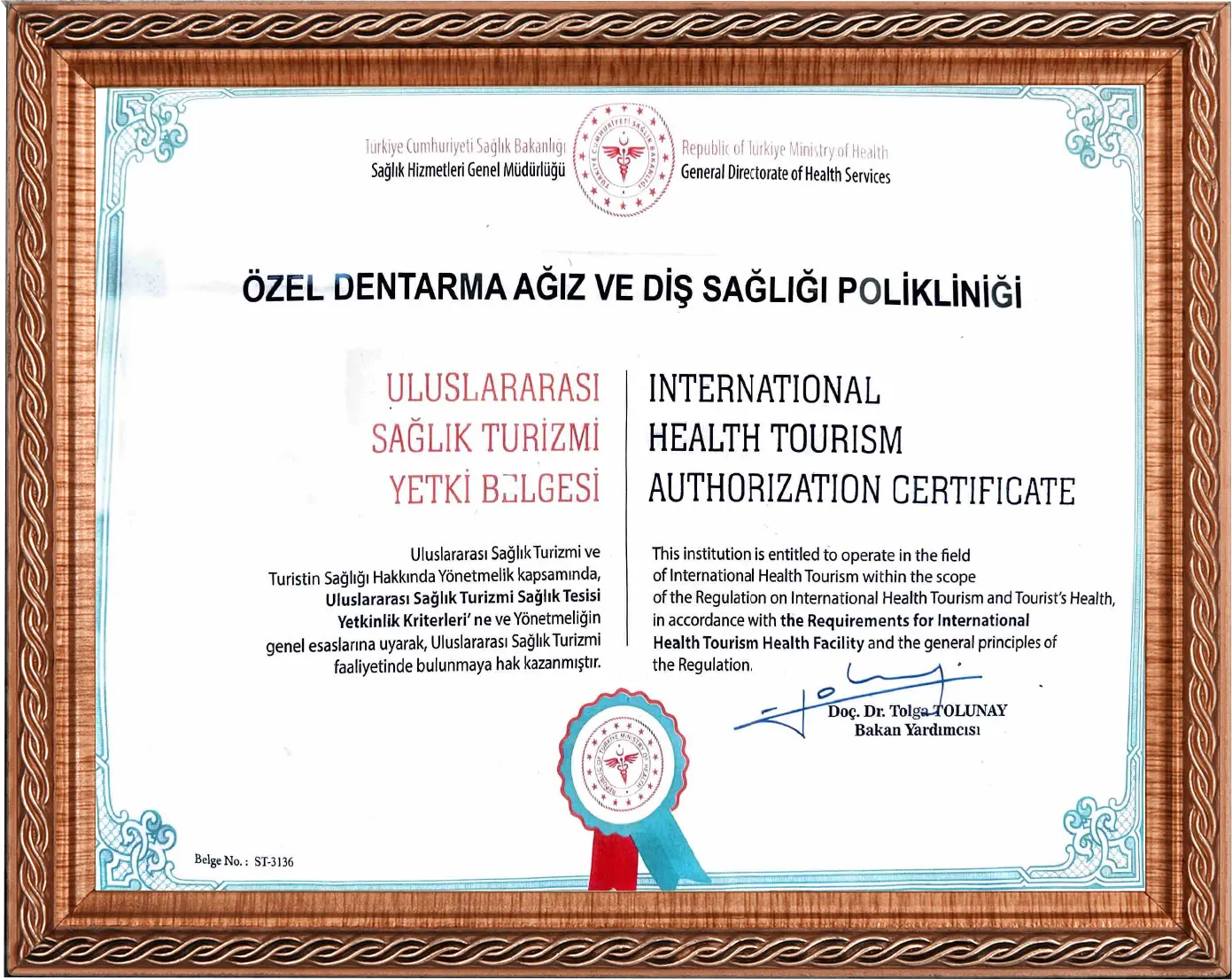
If the quality of a crown case comes down to whether each tooth was assessed properly, then who does the assessing is the whole question. DentArma is a professor-led dental center in the Lara district of Antalya, founded and led by Проф. д-р Эмре Шекер и Проф. д-р Башак Шекер. Crown and smile-design cases are planned at professor level rather than delegated to whichever clinician is on shift. The clinic has treated more than 7,000 international patients over 20+ years, is supported by a 27-person clinical and patient-care team, holds 4.9 / 5 across 700+ verified online reviews, and is authorised by the Turkish Ministry of Health to care for and treat international patients.
The clinic is an award-winning dental center recognised in 2026 Antalya is around four hours’ direct flight from most UK and European airports, with connections from North America and Australia via Istanbul, and hotel accommodation and VIP transfers are included in every package. UK patients can meet the team in person at a UK Meeting Day before booking, and are supported afterwards by UK aftercare clinics in Surrey and South Croydon; patients everywhere have direct WhatsApp access to the clinic at every stage.

A published, peer-reviewed academic with 40+ publications and founding professor at DentArma. Prosthodontics is the discipline that governs crowns, bridges and materials selection — deciding zirconia or e.max, monolithic or layered, tooth by tooth — and he personally leads and reviews these cases for international patients.
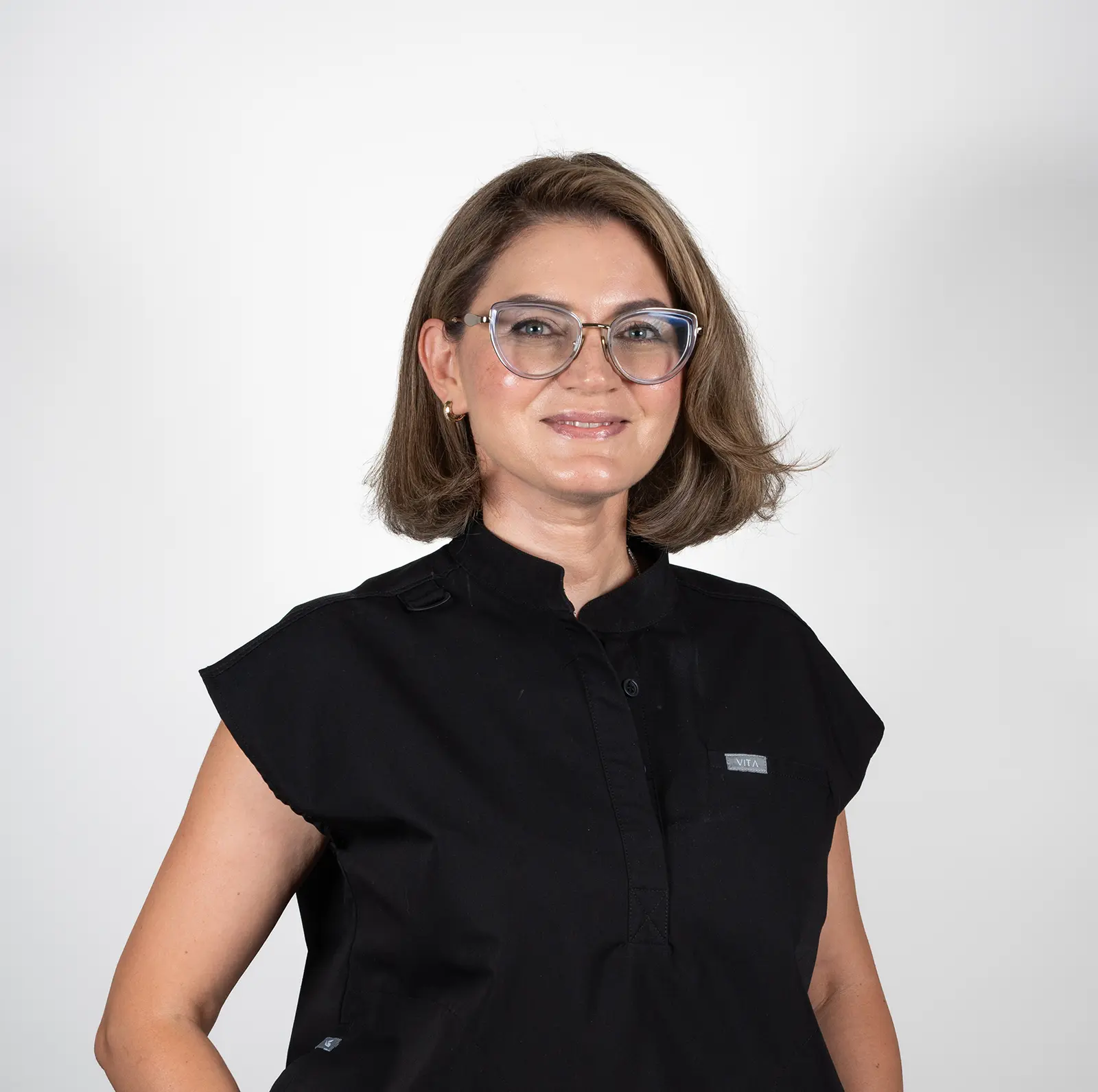
Founding professor at DentArma and a professor of periodontology, overseeing the gum health and margin-level detail that determine whether crowns stay healthy underneath — the most common reason crown work fails early.
Frequently asked questions about zirconium crowns in Turkey
What are zirconium crowns in Turkey?
Zirconium crowns, also called zirconia crowns, are full-coverage restorations milled from zirconium dioxide — a metal-free ceramic with flexural strength of roughly 900–1200 MPa. They cover the entire tooth and are used where a tooth is damaged, heavily filled, root-treated or badly worn. Turkey is popular for them because the same German and Swiss-standard materials used in Western Europe and North America are available at substantially lower cost, usually within a single trip of five to seven days.
How much do zirconium crowns cost in Turkey?
Across Turkish clinics, zirconium crowns typically range from £140–£250 per crown (≈ $190–$340 USD / €165–€290 EUR), depending on the clinic, the zirconia brand and whether the crown is monolithic or layered. That compares with roughly £500–£800 privately in the UK and $800–$1,500 in the USA — a saving of around 65–75%. Your exact price is confirmed in a fixed written quote after a free consultation.
Are zirconium crowns better than e.max crowns?
Neither is universally better — they suit different teeth. Zirconia is far stronger (≈900–1200 MPa vs ≈360–400 MPa for IPS e.max), making it the choice for molars, bridges and grinding. E.max transmits light more like natural enamel, usually making it better for front teeth. Many well-planned cases combine both across the mouth.
How long do zirconium crowns last?
Commonly 10 to 15 years and frequently longer with good oral hygiene, regular check-ups and a night guard if you grind. No crown is permanent, and lifespan depends more on preparation quality, margin fit and gum health than on the material itself. At DentArma, crowns carry a 5-year clinic warranty.
What is the difference between monolithic and layered zirconia?
Monolithic zirconia is milled from a single block with no porcelain layer — the strongest option, with no junction where chipping can start. Layered zirconia has a translucent porcelain layer over a zirconia core, giving a more lifelike appearance but introducing a potential chip point. Monolithic is usually preferred for molars and heavy bites, layered for visible teeth where translucency matters most.
What is included in a zirconium crowns Turkey package?
Consultation, examination and panoramic X-ray, digital smile design and shade selection, tooth preparation, temporary crowns, the crowns themselves, try-in, bite adjustment and final cementation, hotel accommodation, VIP transfers, medications and aftercare checks. Flights are normally the only major cost on top. Because “all-inclusive” isn’t regulated, require an itemised written quote stating unit count and zirconia brand — and ask about exclusions such as root canals, build-ups and gum treatment.
Are zirconium crowns the same as veneers?
No. A crown covers the entire tooth and removes substantially more tooth structure; a veneer covers only the front surface, removing roughly 0.3–0.7mm of enamel. Crowns suit damaged, heavily filled or root-treated teeth; veneers suit cosmetic change on healthy teeth. Many packages advertised as veneers are clinically crowns, so confirm the treatment type in writing before booking.
How do I choose the best dental clinic in Turkey for zirconium crowns?
Check six things: whether crowns are genuinely right for your teeth rather than a package default, which zirconia brand is used and whether it’s documented with LOT and REF numbers, whether monolithic or layered is recommended and why, who plans and reviews your case, whether gum health is assessed first, and what the written guarantee covers. A clinic answering all six clearly is planning treatment rather than selling units.
How long does zirconium crown treatment take in Turkey?
Usually a single trip of about five to seven days — consultation and digital smile design, preparation and scanning, temporary crowns, try-in, then final cementation. Implant treatment is different and requires two visits separated by three to four months.
Do zirconium crowns in Turkey come with a guarantee?
At DentArma, crowns and bridges carry a 5-year warranty from the clinic, documented in writing. Every patient also receives a Crown Certificate recording the exact material, manufacturer and LOT and REF numbers, so any dentist worldwide can identify, match and service the work.
Get a plan, not a package.
Send photos of your smile and a panoramic X-ray for a free, no-obligation treatment plan — stating tooth by tooth which need a crown, which material, and exactly what it costs.